Why Self-Defense Classes That Start With Techniques Are Teaching It Backwards
Self-defense classes that open with wrist releases and strikes are teaching the least useful part first, since the overwhelming majority of avoided incidents come from noticing and avoiding a situation before it escalates — not from physically fighting out of one that already has.

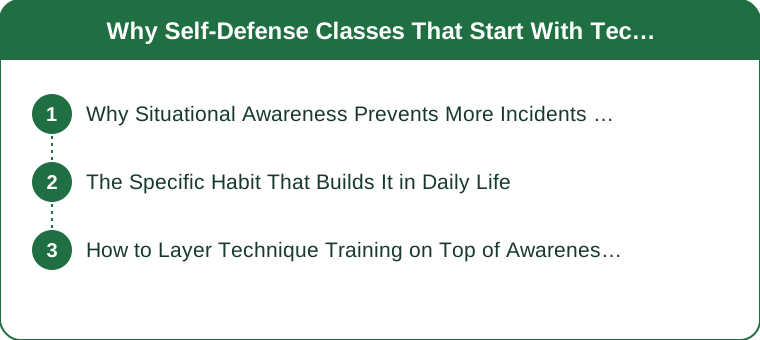
Why Situational Awareness Prevents More Incidents Than Any Physical Technique
The prevention-over-response logic: the most-incidents-are-avoided-before-contact-happens (the majority of actual safety outcomes being determined well before any physical confrontation occurs — the avoided-before-contact), the the-awareness-buys-time-and-options (the noticing a situation early creating room to leave, call for help, or change route entirely — the early-notice-creates-options), the the-a-technique-only-helps-once-avoidance-has-already-failed (the physical skills only becoming relevant at the point awareness has already run out of room to prevent things — the technique-is-the-last-resort), and the reframe (technique being a genuinely valuable but last-resort layer, while awareness is the layer doing most of the actual protective work before things ever reach that point).

The Specific Habit That Builds It in Daily Life
The practical awareness habit: the phone-down-during-transitions (the specifically putting the phone away while walking between a car and a building, or through a parking lot — the phone-down-in-transitions), the the-scan-the-environment-on-a-simple-repeatable-pattern (the doing a quick, consistent visual scan of surroundings rather than a vague general sense of alertness — the repeatable-scan-pattern), the the-notice-exits-and-people-not-just-obstacles (the specifically registering where exits are and who else is present, not just navigating around physical objects — the notice-exits-and-people), and the frame (putting the phone away during transitions and running a simple, repeatable scan for exits and people being a concrete, teachable habit rather than a vague instruction to just be aware).
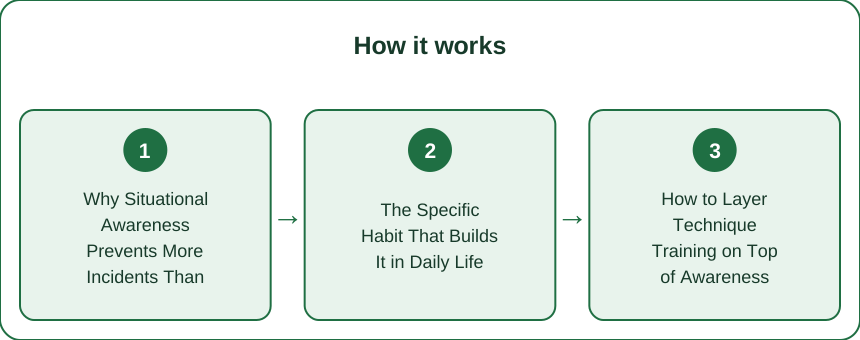
How to Layer Technique Training on Top of Awareness Instead of the Other Way Around
The correct training order: the start-any-class-with-awareness-and-avoidance-drills-first (the structuring the very first sessions around noticing and avoiding rather than physical technique — the awareness-drills-come-first), the the-introduce-technique-as-the-what-if-awareness-fails-layer (the framing physical skills explicitly as backup for when the earlier layer didn’t prevent things — the technique-as-backup-framing), the the-practice-the-full-sequence-together-not-in-isolation (the running scenarios that include the awareness moment, the failed avoidance, and the technique response as one connected sequence — the practice-the-whole-sequence), and the frame (teaching awareness and avoidance first, technique explicitly as the backup layer, and practicing the full sequence together — training in the order that actually reflects how real incidents unfold).
Self-defense classes that start with physical techniques are teaching the least statistically useful part first, since most avoided incidents happen because a situation was noticed and avoided before any physical confrontation, not because someone fought their way out of one — awareness buys the time and options that make avoidance possible, while technique only becomes relevant once that earlier layer has already run out of room. Build awareness in daily life through concrete habits like putting the phone away specifically during transitions between a car and a building, and running a simple, repeatable visual scan for exits and people rather than a vague sense of alertness. Train technique as an explicit backup layer on top of that, practicing full scenarios that connect the awareness moment, a failed avoidance, and the technique response together, rather than drilling technique in isolation from everything that precedes it.
Keep Reading
This article is for general informational and styling purposes only. Fit, sizing, and product availability may vary.