Talking It Down: Verbal De-Escalation for Everyday Conflicts
The self-defense curriculum’s most-used chapter is never the strikes — it is the talking: the road-rage moment, the agitated stranger, the escalating customer. Verbal de-escalation resolves the overwhelming majority of confrontations, and its techniques train like anything else.

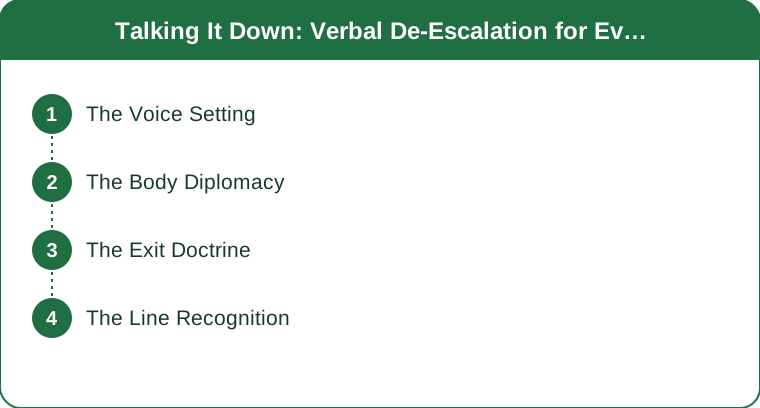
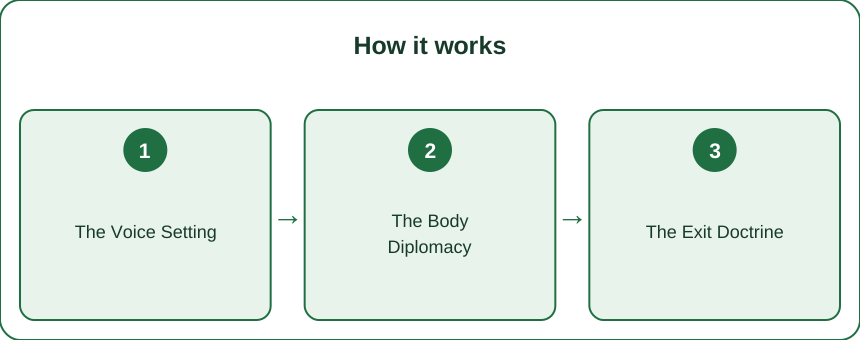
The Voice Setting
De-escalation runs on tone: lower pitch, slower pace, volume steady (matching an agitated person’s energy escalates; counter-programming it entrains). The content matters less than the delivery — a calm ‘okay, I hear you’ does more work than any clever sentence.
The Body Diplomacy
The stance from the ready-position playbook doubles as de-escalation: angled body (less confrontational than square-on), open palms visible, two-arms distance maintained. The posture reads as calming to the person AND positions you for exit — de-escalation and readiness share the same choreography.

The Exit Doctrine
The goal is never winning; it is leaving: the agree-and-go (‘you’re right, my mistake — have a good one’ costs nothing and ends everything), the sidestep, the walk toward light and people. Ego is de-escalation’s saboteur — the parking-spot dispute deserves surrender speed.
The Line Recognition
De-escalation has limits: fixed targeting, closing distance despite calm signals, or the gut’s clear alarm shifts the script from talking to distance-voice-and-exit (the loud NO, the departure, the help summoned). Talking down works on the angry; the playbook’s other chapters exist for the rest — and knowing which chapter you’re in is the actual skill.
Low and slow, angled and open, agree and leave. The confrontation’s best ending was always the exit — de-escalation just makes the exit available earlier, cheaper and calmer.
Keep Reading
This article is for general informational and styling purposes only. Fit, sizing, and product availability may vary.